

AI for Mundane: Hollywood’s New Secret Weapon—The AI Editor
Welcome to www.aiformundane.com. In the glamorous world of film, the work is often anything but. Post-production—the hours spent meticulously color-correcting, sifting through hundreds of takes, stabilizing shaky footage, and generating visual effects—is the very definition of a mundane, repetitive grind.
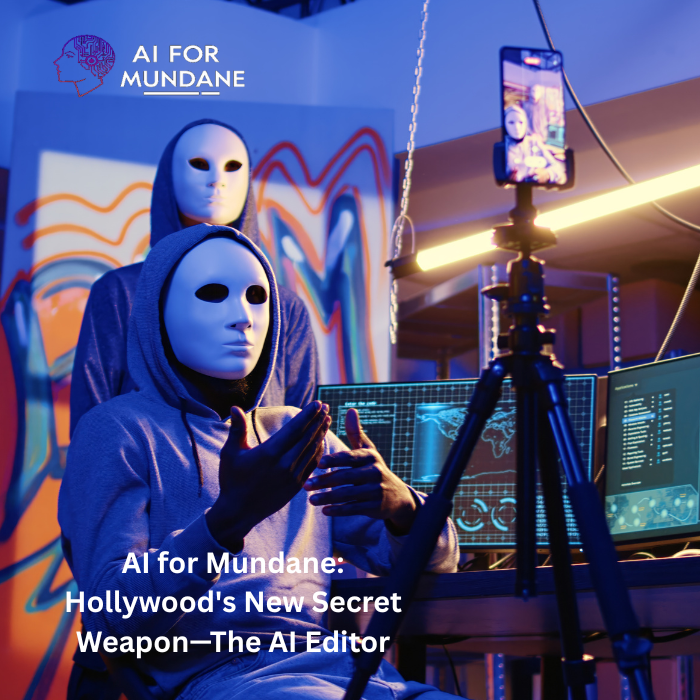
Today, Artificial Intelligence is revolutionizing this work, turning days of manual labor into minutes of automated refinement. AI is not replacing the editor’s creative vision; it is replacing the technical toil, ensuring more time is spent on storytelling and less on scrubbing timelines.
How AI Automates the Mundane in Film Editing
AI systems, trained on thousands of hours of high-quality film, are now built directly into professional editing software (like Adobe Premiere Pro and DaVinci Resolve) and specialized online platforms (like Runway and Topaz Video AI).
1. The Rough Cut Assistant
The Mundane Task: Manually watching 50 hours of raw footage from a shoot, logging every good take, and removing filler words like “um” and silences.
AI’s Role: AI tools perform Scene Detection and Facial Recognition, identifying every scene change, every character, and every emotional high point. Text-Based Editing (like in Premiere Pro and Descript) generates a full transcript, allowing the editor to create the rough cut simply by editing the text document—deleting a sentence deletes the corresponding video clip.
2. Visual Effects (VFX) & Rotoscoping
The Mundane Task: Manually drawing masks (rotoscoping) around moving objects or characters frame-by-frame to separate them from the background, a complex, high-cost, and mind-numbingly repetitive job.
AI’s Role: AI automates rotoscoping and object tracking. Tools like Runway’s Inpainting or Adobe’s Generative Fill allow editors to remove an unwanted boom mic or a distracting person from a shot simply by circling it. The AI intelligently generates a realistic background to fill the empty space, transforming a day’s work into a minute’s click.
3. Color Grading and Audio Clean-up
The Mundane Task: Spending hours manually matching the color and light between two shots filmed at different times of the day or manually removing distracting background noise.
AI’s Role: Intelligent Color Grading analyzes the desired look (e.g., “cinematic noir” or “warm summer evening”) and automatically applies consistent color correction across hundreds of clips. For audio, AI tools like Adobe Enhance Speech automatically remove hums, echo, and background noise, making dialogue sound like it was recorded in a studio.
4. Post-Production Utility and Stabilization
The Mundane Task: Dealing with shaky footage, creating subtitles, or resizing a film for different platforms (cinema, Instagram, TikTok).
AI’s Role: AI offers instant Video Stabilization to smooth out handheld camera movements. Automatic Subtitling (in 18+ languages) is done with near-perfect accuracy. Auto-Reframe intelligently crops and repositions the central action of a scene to fit perfectly into a vertical aspect ratio, a huge time-saver for social media marketing teams.
Top AI Tools Revolutionizing Film Editing
The modern film editor’s toolkit is incomplete without AI features from these major players:
Adobe Premiere Pro (Sensei AI): Features like Text-Based Editing, Auto-Reframe, and intelligent audio tagging.
DaVinci Resolve: Features robust AI-powered tools for color grading, facial recognition for quick adjustments, and object tracking.
Runway (Gen-3 Alpha): The leader in generative video. Used not just for editing, but for creating new visual elements or entire short clips from scratch.
Descript: Known for its text-based editing platform, making content-heavy video like interviews and podcasts incredibly fast to edit.
The Editor’s New Role: From Technician to Visionary
AI will not replace the human editor because editing is ultimately an act of storytelling and emotional timing—something only a human can feel.
However, AI is eliminating 80% of the technical, mundane labor. The editor is now elevated from a button-pusher to a strategic visionary, spending less time on frame counts and more time perfecting the rhythm, emotional arc, and narrative impact that makes a film great. AI is the tool that finally lets the film industry focus purely on the art of the story.