

AI for Mundane: A Blog on AI in Marketing and Advertising
Welcome to www.aiformundane.com, where we explore how artificial intelligence is taking on the repetitive, time-consuming tasks across industries.
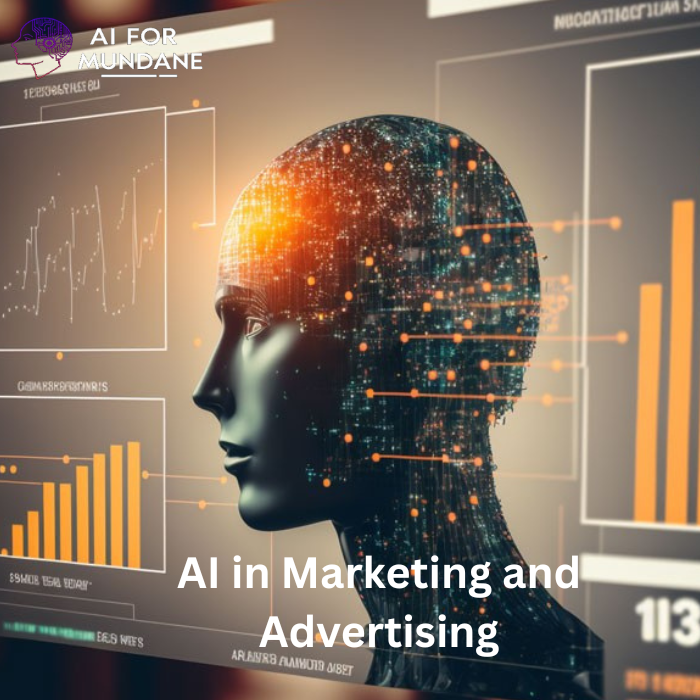
Today, we’re diving into the vibrant world of Marketing and Advertising, where AI is transforming guesswork into precision and broad campaigns into hyper-personalized conversations.
The goal of marketing has always been simple: deliver the right message to the right person at the right time. What once required labor-intensive analysis and scattershot campaigns is now being automated by AI, turning the tedious work of modern marketing into something beautifully mundane.
The “Tools” of AI in Modern Marketing
AI is present at every stage of the marketing funnel, quietly automating the high-volume, repetitive tasks so that human creativity can focus on what truly matters: strategy, empathy, and storytelling.
1. Hyper-Personalized Ad Targeting: The End of Guesswork
The Old Way: Marketers manually grouped audiences by broad demographics like age, gender, or income.
The AI Way: AI models now analyze billions of data points—purchase history, browsing patterns, social engagement, even how long a person pauses on a video—to predict what they’ll buy next.
Beyond the Mundane: Instead of guessing that “moms aged 30–40” might be interested in a product, AI knows that this specific mom—who just searched for organic baby food and lives in a bike-friendly city—is the ideal person to see an ad for a new stroller. The grind of audience segmentation has been replaced by instant, precision targeting.
2. AI-Generated Content: From Blank Page to Draft in Seconds
The Old Way: Copywriters spent hours drafting endless variations of subject lines, captions, and ad copy for A/B testing.
The AI Way: Generative AI instantly creates dozens—or hundreds—of variations of copy and visuals, aligned with brand tone and guidelines, at the click of a button.
Beyond the Mundane: Instead of sweating over 10 subject lines in an hour, a copywriter can ask AI for 100 options in two minutes, then spend the remaining 58 minutes perfecting the top five. AI handles the heavy drafting work, while humans shape the final message into something exceptional.
3. Customer Behavior Prediction: Anticipating the Next Step
The Old Way: Identifying churn risks or predicting high-value actions required hours of manual data crunching and guesswork.
The AI Way: Predictive AI models analyze the entire customer journey—clicks, purchases, response times—to detect subtle signals of churn or intent.
Beyond the Mundane: Instead of reacting after a customer leaves, AI flags high-risk accounts in advance, allowing teams to launch targeted retention campaigns. The dull, reactive work of chasing lost customers is replaced with proactive, personalized intervention.
4. Sentiment Analysis: An Automated Ear to the Ground
The Old Way: Tracking brand mentions across millions of social posts was an overwhelming, nearly impossible task.
The AI Way: NLP-powered sentiment analysis scans millions of comments, reviews, and posts in real time—detecting not only mentions, but the underlying emotion (positive, neutral, negative).
Beyond the Mundane: A sudden spike in negative sentiment around a product feature? AI spots it instantly, alerting the brand before it snowballs. What was once a vast, unmanageable ocean of data becomes actionable, real-time intelligence.
The AI Marketer: Strategist, Not Scribe
AI isn’t replacing marketers—it’s redefining their role. The mundane tasks—data crunching, bulk drafting, A/B testing, monitoring—are now handled by algorithms.
That frees marketers to focus on the truly human work: empathy, creativity, strategy, and brand storytelling.
The future of marketing isn’t about pushing more ads—it’s about defining the creative vision, ethical boundaries, and strategic goals that guide the AI. With AI taking care of the execution, marketers can finally step into the role they were meant for: innovative, customer-focused strategists.